Introduction
Artificial intelligence is changing how developers write code, build software, and protect digital systems. But as businesses become more dependent on technology, cybersecurity is becoming just as important as development itself.
While researching new AI tools, Google Gemini 4 Carbon caught my attention because of its focus on cybersecurity. I wanted to understand how an AI model could help developers identify vulnerabilities, investigate suspicious activity, and fix security problems more efficiently.Introducing Gemini 4 Carbon
But there is another question worth asking: Can AI make cybersecurity more effective without creating new security risks of its own?
In this guide, we will explore Google Gemini 4 Carbon, its key features, reported performance, pricing, potential uses, and current access options. We will also look at whether it could be a useful tool for developers and cybersecurity teams.
What Is Google Gemini 4 Carbon?
Google Gemini 4 Carbon is an AI model announced by Google on October 28, 2026. Google presents it as a model designed for advanced cybersecurity work and tasks that require sustained reasoning.
Unlike a general AI assistant used mainly for everyday questions, Carbon is aimed at demanding technical tasks, including finding software vulnerabilities, helping developers understand security problems, and supporting vulnerability fixes.
According to Google, the model is intended to help cybersecurity professionals and developers work more effectively. However, its reported capabilities should not be confused with a guarantee that it can identify every vulnerability or secure an entire application without human supervision.
In my view, tools like this could become especially useful for smaller development teams. Not every business has a large security department, so AI assistance may help teams identify potential weaknesses earlier. Still, serious security decisions should remain under the supervision of qualified professionals.
Key Features of Google Gemini 4 Carbon
1. Vulnerability Detection
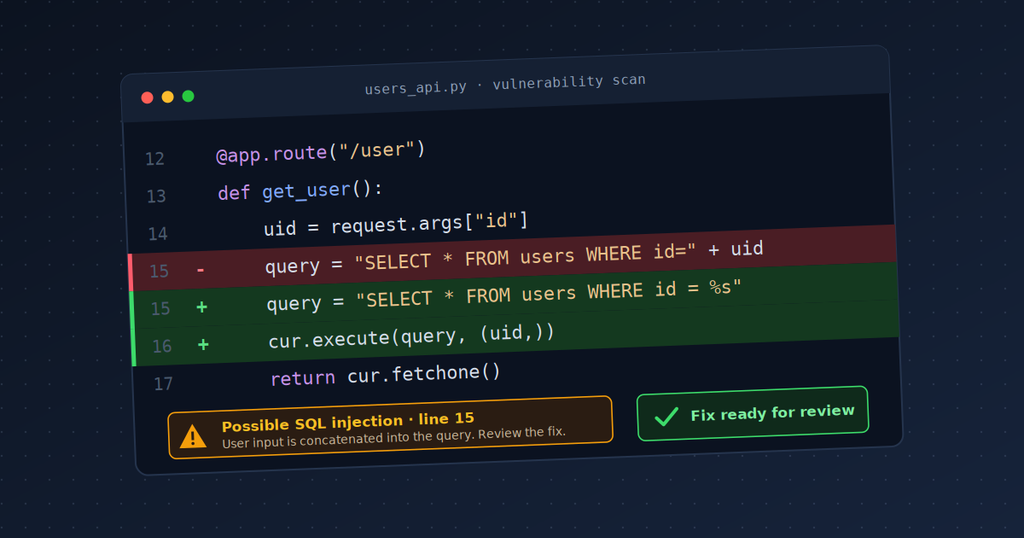
One of Carbon’s most important reported capabilities is identifying potential weaknesses in software.
Security vulnerabilities can allow attackers to access sensitive information, disrupt services, or exploit systems. Finding these issues before software is released can reduce the risk of expensive security problems later.
Google reported that Gemini 4 Carbon achieved 88.2% on SEC-bench Pro, a benchmark associated with vulnerability-finding tasks. This is a company-reported benchmark result, not a guarantee of the same performance in every real-world application.
For developers, the potential benefit is straightforward. AI could help examine code, flag suspicious patterns, and direct attention toward areas that need further investigation.
My take: Vulnerability detection is the feature I find most valuable. Catching a problem early can save time and reduce the chance of a small coding mistake becoming a serious security issue. I would also want the AI to explain why a particular piece of code is risky, rather than simply flagging it.
2. Exploit Analysis and Security Testing
Finding a vulnerability is only part of cybersecurity. Teams also need to understand how serious it is and whether it can be exploited.
Google reported a score of 54.8% on ExploitGym, a benchmark focused on exploitation-related tasks.
This suggests that Carbon is being evaluated on more than simply recognizing questionable code. However, benchmark performance does not prove that the model can safely or successfully handle every security investigation.
In a controlled environment, AI-assisted exploit analysis could help authorized security teams understand potential attack paths and prioritize issues for testing.
These capabilities must be used responsibly. Security testing should only be conducted on systems that the tester owns or has permission to assess.
3. Vulnerability Fixes and Root-Cause Analysis
Identifying a weakness is useful, but developers also need to understand its cause and find a reliable solution.
Google reported that Carbon scored 71.0% on CWE-bench, a benchmark related to vulnerability patching.
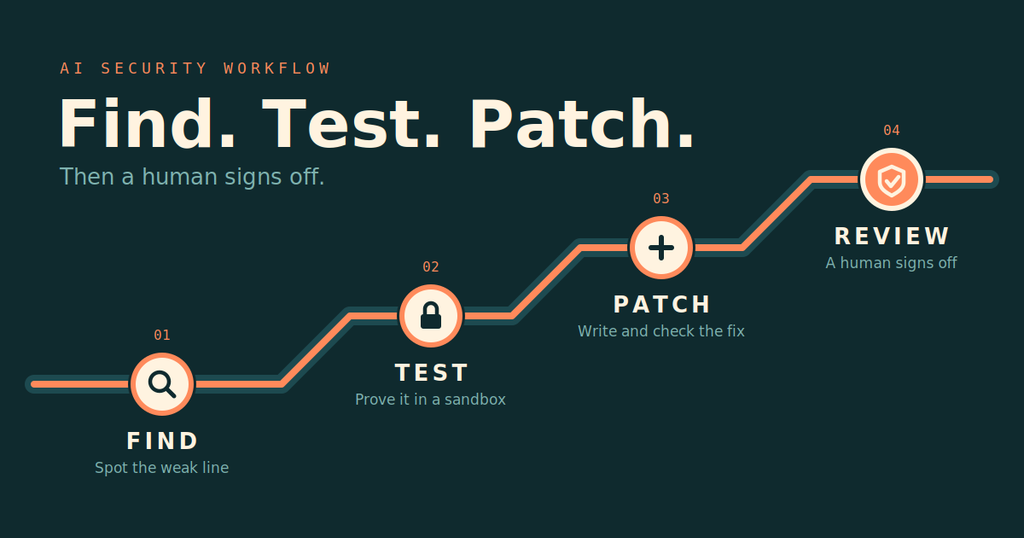
AI-assisted patching could help developers investigate the cause of a problem, consider possible fixes, and generate code for review. This may reduce the time spent moving from identifying a bug to developing a solution.
However, a suggested patch is not automatically a safe patch. Developers still need to review the changes, run appropriate tests, and check that the fix has not introduced another issue.
My take: I would value a tool that explains the problem, suggests a fix, and provides a way to test the change. That would be more useful than receiving a block of generated code without understanding what it does.
4. Support for Complex, Long-Running Tasks
Some software and cybersecurity tasks cannot be completed with one simple question. They may require examining a large codebase, investigating several related problems, and checking whether proposed changes work together.
Google describes Carbon as having capabilities suited to more demanding, extended tasks.
If these capabilities perform reliably in practice, they could help developers investigate unfamiliar projects and work through complicated problems with less manual effort.
Still, long-running tasks need oversight. AI systems can make incorrect assumptions, miss important details, or produce changes that appear reasonable but fail under real conditions.
5. Secure Code Generation
AI coding tools can help generate code quickly, but speed alone is not enough. Code also needs to follow sound security practices.
Google has reported improvements in secure code generation and described internal examples of Carbon helping with security-related patch generation.
These claims are encouraging, but they should be understood as Google’s reported results rather than independent proof that all code produced by Carbon is secure.
For developers, the best approach is to treat generated code as a starting point. Review it, test it, and use appropriate security checks before relying on it in a production system.
How Could Developers and Businesses Use Gemini 4 Carbon?
The value of a cybersecurity AI tool depends on the problems it can help solve. Here are some potential use cases.
Finding weaknesses before release: Development teams could use AI assistance to investigate suspicious code and identify areas that need a closer security review.
Understanding unfamiliar code: Developers joining an existing project could ask an AI tool to explain how different components work and highlight areas that deserve attention.
Investigating bugs: AI could help developers narrow down possible causes, suggest fixes, and recommend tests.
Reviewing proposed security fixes: Security teams could use AI-generated suggestions as part of a broader review process, while people remain responsible for approving changes.
Supporting smaller teams: Businesses without large internal security departments may benefit from assistance with routine analysis, provided they have appropriate safeguards and expert support for serious issues.
I believe AI security features will increasingly become part of regular software development. Developers may use them alongside code editors, automated tests, and security scanners.
However, advanced threat analysis and incident response will still require specialist knowledge. AI should support security professionals, not replace them.
Gemini 4 Carbon Benchmark Results: What Do They Tell Us?
Google has shared several benchmark results to demonstrate Carbon’s capabilities.
| Benchmark | Google-reported result | General focus |
| SEC-bench Pro | 88.2% | Vulnerability finding |
| ExploitGym | 54.8% | Exploitation-related tasks |
| CWE-bench | 71.0% | Vulnerability patching |
These scores offer an initial way to understand what Google is testing. However, the benchmarks measure different tasks, so their percentages should not be compared as though they represent one shared measure of overall intelligence.
It is also important to distinguish a company’s benchmark claims from independent testing. The figures above are reported by Google, and they do not establish how Carbon will perform on every codebase or security problem.
My take: Benchmark scores are useful, but I would rather see independent testing and practical demonstrations before deciding whether a tool is worth relying on. I would like to know how it performs on real projects, how often its suggestions are wrong, and how much human review is still required.Gemini model evaluations
For developers and businesses, practical results matter more than a headline score alone.
Gemini 4 Carbon vs Gemini 4 Argon
Google’s Gemini 4 family includes different models intended for different uses. Carbon has been announced with a particular focus on cybersecurity and demanding technical tasks, while Argon is another model in the Gemini 4 family.
Here is a practical comparison based on the information available in Google’s announcement.
| Area | Gemini 4 Carbon | Gemini 4 Argon |
| Main focus | Advanced cybersecurity and demanding technical work | General advanced AI capabilities |
| Security work | Specifically highlighted in Google’s Carbon announcement | Security-related capabilities are also discussed in Google’s model information |
| Benchmark comparison | Google published Carbon results for several security benchmarks | Avoid assuming a direct comparison without matching benchmark results |
| Access | Initially limited rollout for selected cyber defenders and trusted partners | Availability depends on Google’s current product and access terms |
| Best way to evaluate | Test security workflows and review proposed fixes | Evaluate against the particular tasks you need to complete |
This table is not a claim that Carbon is better than Argon in every situation. A fair comparison requires equivalent tests, clear evaluation methods, and evidence from the tasks a user actually needs to perform.Gemini models
If your main interest is cybersecurity, Carbon’s stated focus makes it worth watching. If you need a more general AI assistant, compare the models against your own requirements before choosing one.
Google Gemini 4 Carbon Pricing
Google announced the following introductory API prices for Gemini 4 Carbon:
| Usage | Introductory price |
| Input tokens | $2 per million |
| Output tokens | $10 per million |
| Cached input tokens | 95% off the input price |
Google also stated that the prices would later change to $4 per million input tokens and $20 per million output tokens after the introductory period. The announcement did not specify an exact end date for the introductory pricing.
These are token-based API prices, not necessarily the total cost of using the model for a project. Actual spending depends on how much input and output the application generates, the complexity of the work, and any other applicable costs.
For example, a business running frequent, lengthy security analyses may spend much more than a developer who only uses the model occasionally.
My take: The introductory price may be reasonable if Carbon delivers meaningful value on real projects. But price alone should not determine whether it is worth using. I would consider usage limits, the quality of its results, the time it saves, and the cost of competing tools.
Before using it for important work, calculate the expected cost for your own workflow rather than relying on the headline price.
How to Get Access to Google Gemini 4 Carbon
Access is currently limited, so not every developer or business can start using Carbon immediately.
According to Google’s announcement, the initial rollout is aimed at selected cyber defenders, with phased access for trusted partners through its Fairwind Program. Google has said it intends to expand access through its products, but the announcement did not provide a firm general release date.
If you want to explore access, follow these steps:
- Read Google’s official announcement. Check the latest rollout information and any updates about availability.Google’s Gemini 4 Carbon announcement
- Review the Fairwind Program. Visit Google’s program page to understand its current eligibility requirements and which models or security tools are included.Fairwind Program
- Check the exact model being offered. Access to another Gemini model or a cybersecurity program does not automatically mean you have access to Carbon.Google DeepMind’s Gemini models
- Follow Google’s official updates. Availability and program conditions may change as the rollout progresses.Google launches Gemini 4 Carbon AI model with cybersecurity focus
Do not assume that joining a program guarantees access to Carbon. Read the current terms and check which models are actually available to you.
Would I apply for early access? Yes, if I were eligible. I would be interested in testing its coding and security capabilities, but I would keep my expectations realistic and avoid depending on an early-access model for critical decisions without proper review.
Is Google Gemini 4 Carbon Worth Watching?
Gemini 4 Carbon is worth following if you work with software development, cybersecurity, or AI-assisted code review. Google’s reported results suggest that the model is being designed to help with vulnerability discovery, exploitation-related tasks, and patching.
But there are still important questions to answer through practical use. How reliable are its findings on real projects? How often do its suggested fixes need changes? How much time does it save after human review? And how does its total cost compare with other tools?
These are the questions I would want answered before recommending it for an important business workflow.
AI can make security work more efficient, but it can also introduce risks if developers trust generated code without checking it. The strongest approach is to combine AI assistance with human expertise, testing, and established security practices.
Frequently Asked Questions
What is Google Gemini 4 Carbon?
Google Gemini 4 Carbon is an AI model announced by Google with a focus on cybersecurity and demanding technical tasks, including vulnerability finding and patching.
What are Gemini 4 Carbon’s main features?
Google highlights vulnerability detection, exploitation-related tasks, vulnerability patching, secure code generation, and capabilities for complex technical work.
How much does Gemini 4 Carbon cost?
Google announced introductory API pricing of $2 per million input tokens and $10 per million output tokens. Later pricing was stated as $4 and $20 per million tokens, respectively. Check Google’s official documentation for current terms.
Is Gemini 4 Carbon available to everyone?
No. Google’s announcement describes an initial limited rollout and phased access for trusted partners. A general release date was not specified in the announcement.
Can Gemini 4 Carbon replace cybersecurity professionals?
It should not be treated as a replacement for cybersecurity professionals. AI can assist with analysis and proposed fixes, but security decisions require validation, oversight, and specialist judgment.
Are Google’s benchmark results proof that Carbon is always accurate?
No. Benchmarks measure performance on particular evaluations. Real-world results can differ depending on the codebase, task, security environment, and evaluation method.
Should developers trust AI-generated security fixes?
They should review and test them before use. AI-generated fixes can be helpful, but they may be incomplete, incorrect, or introduce new problems.
Final Thoughts
Google Gemini 4 Carbon is an interesting development because it puts cybersecurity at the center of its announced capabilities. Its reported benchmark results and introductory pricing make it worth watching, especially for developers and businesses that want to improve their security workflows.
Personally, I believe AI will become a regular part of software development, helping teams understand code, investigate bugs, and identify potential weaknesses earlier. But I do not think it removes the need for skilled developers or security professionals.
The real test will be how well Carbon performs on practical projects, how reliably it identifies and helps fix vulnerabilities, and whether the time saved justifies its cost.
For now, I would treat it as a promising tool to evaluate, not a complete cybersecurity solution.
Discover smarter ways to work with the latest AI tools, reviews, and recommendations at TechsNeurons.